Crawlspace Mold Removal & Remediation in Cumming, GA
Professional Crawlspace Mold Removal, Remediation & Cleanout for North Georgia Homes
Mold in a crawlspace is often connected to elevated humidity, moisture intrusion, poor ventilation, or inadequate ground moisture protection. Mold Heroes provides professional crawlspace mold remediation designed to address microbial growth, contaminated surfaces, and the moisture conditions contributing to the problem.
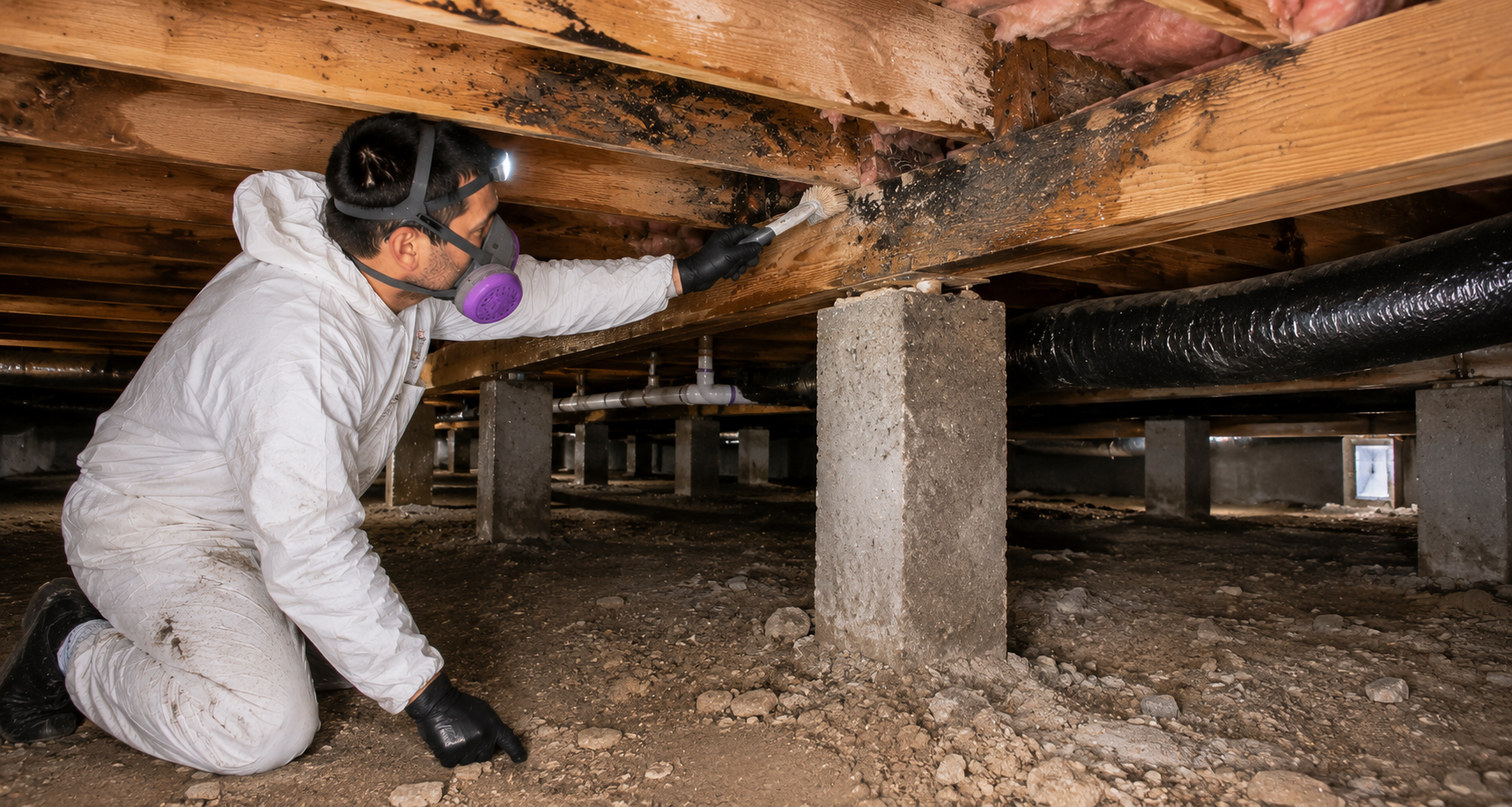
Our remediation approach follows applicable IICRC S520 principles and may include containment, HEPA air filtration, HEPA vacuuming, detailed surface cleaning, removal of affected materials when necessary, and recommendations for correcting underlying moisture conditions.
Why Mold Develops in Crawlspaces
Crawlspaces can create ideal conditions for mold when excess moisture becomes trapped beneath the home. In North Georgia, elevated humidity combined with ground moisture, plumbing leaks, drainage problems, or inadequate moisture control can allow mold to develop on floor joists, subflooring, insulation, and other building materials.
Mold remediation should address more than visible growth. Identifying the moisture conditions contributing to the problem is an important part of developing an effective remediation plan.
High Humidity
Elevated crawlspace humidity can create conditions that support mold growth on wood framing and other materials.
Ground Moisture
Moisture evaporating from exposed soil or an inadequate vapor barrier can increase humidity throughout the crawlspace.
Plumbing Leaks
Leaking supply lines, drain lines, or plumbing fixtures can introduce persistent moisture beneath the home.
Drainage & Water Intrusion
Poor exterior drainage, foundation seepage, or standing water can contribute to excessive crawlspace moisture.
Inadequate Moisture Control
Crawlspaces without effective humidity and ground-moisture management can remain damp for extended periods.
Wet or Contaminated Insulation
Insulation exposed to moisture may retain dampness and can require further evaluation or removal during remediation.
Our Crawlspace Mold Remediation Process
Professional crawlspace mold remediation begins with evaluating the extent of microbial growth and identifying the moisture conditions contributing to the problem. Mold Heroes uses a structured remediation approach based on the conditions found in each crawlspace and applicable IICRC S520 mold-remediation principles.
Inspect the Crawlspace
Evaluate visible mold growth, floor joists, subflooring, insulation, foundation areas, plumbing, ground moisture, humidity, and other conditions that may be contributing to the problem.
Establish Containment
When appropriate, establish containment and protect access areas to help prevent contaminants and airborne particles from spreading beyond the work area during remediation.
HEPA Air Filtration
Use professional HEPA-filtered air scrubbers and appropriate negative-air methods during remediation to help control airborne particles within the work area.
Remove Affected Materials When Necessary
Contaminated insulation and other porous materials that cannot be effectively remediated may be carefully removed based on the conditions and remediation scope.
HEPA Cleaning & Surface Remediation
Thoroughly HEPA vacuum and clean affected floor joists, subflooring, wood framing, and other appropriate structural surfaces using professional mold-remediation methods.
Address the Moisture Source
Identify and recommend appropriate solutions for contributing moisture conditions such as high humidity, ground moisture, plumbing leaks, drainage problems, or inadequate moisture control to help reduce conditions favorable to future mold growth.
Remediation First. Moisture Control Next.
Mold remediation addresses the existing contamination. Long-term crawlspace moisture management may involve vapor-barrier improvements, drainage corrections, sealing, dehumidification, or crawlspace encapsulation depending on the conditions of the property.
Crawlspace Cleanout
When appropriate for the project, crawlspace cleanout may be included as part of the remediation scope. This can involve removal of debris, damaged or deteriorated insulation, old plastic sheeting, and other unwanted materials that may be contributing to moisture retention or making the crawlspace difficult to properly remediate. Cleanout scope is determined based on the conditions found during the inspection.
Where Mold Is Commonly Found in a Crawlspace
Crawlspace mold is not always limited to one visible area. Moisture and elevated humidity can affect multiple building materials beneath a home, including structural wood and insulation. During a crawlspace inspection, Mold Heroes evaluates accessible areas to help determine where visible microbial growth and moisture-related conditions are present.
Floor Joists
Wood floor joists can develop microbial growth when exposed to prolonged elevated humidity, condensation, or other moisture conditions.
Subflooring
The underside of the home's subfloor can be affected when moisture remains elevated within the crawlspace for extended periods.
Support Beams & Wood Framing
Structural beams, girders, and other wood framing may show visible growth or moisture-related staining that should be evaluated during the inspection.
Crawlspace Insulation
Insulation can become damp, contaminated, damaged, or deteriorated and may require removal depending on its condition.
Foundation Walls & Piers
Masonry foundation walls and support piers can show moisture intrusion, condensation, staining, or microbial growth that may indicate a larger moisture problem.
HVAC & Plumbing Areas
Condensation, sweating ductwork, plumbing leaks, or nearby water sources can create localized moisture conditions favorable to mold growth.
Visible Mold May Be a Sign of a Larger Moisture Problem
Finding mold on crawlspace joists or subflooring does not automatically identify the source of the moisture. A professional evaluation should consider humidity levels, ground moisture, plumbing, drainage, ventilation, condensation, and other conditions before determining the appropriate remediation and moisture-control plan.
Signs You May Need Crawlspace Mold Remediation
Crawlspace mold problems can develop gradually and may not be obvious from inside the home. Visible microbial growth, persistent moisture, elevated humidity, or deteriorating materials beneath the home can indicate that the crawlspace should be professionally evaluated.
Visible Growth on Wood Framing
Discoloration or suspected microbial growth on floor joists, subflooring, support beams, or other wood surfaces should be evaluated to determine the extent of the condition.
Persistent Musty Odors
A persistent musty or earthy odor coming from the crawlspace may indicate excessive moisture or microbial activity that warrants further investigation.
High Crawlspace Humidity
Consistently elevated relative humidity can create conditions favorable to microbial growth and moisture-related deterioration.
Wet or Damaged Insulation
Sagging, damp, stained, or deteriorated insulation can be a sign of ongoing moisture problems within the crawlspace.
Condensation or Sweating Ductwork
Condensation on HVAC ducts, plumbing lines, or other surfaces can introduce additional moisture and may indicate that crawlspace humidity is not being adequately controlled.
Standing Water or Damp Soil
Water intrusion, drainage problems, or persistent ground moisture can contribute to elevated humidity and recurring crawlspace moisture problems.
Not Sure Whether It Is Mold?
Mold Heroes can inspect accessible crawlspace areas, evaluate visible conditions and moisture concerns, and explain whether professional mold remediation, additional mold testing, or moisture-control improvements should be considered.
Crawlspace Mold Remediation vs. Encapsulation
Mold remediation and crawlspace encapsulation serve different purposes. Mold remediation addresses existing microbial contamination, while crawlspace encapsulation is a moisture-control strategy designed to help manage conditions beneath the home.
When both services are needed, existing mold contamination should be properly addressed before the crawlspace is encapsulated.
Crawlspace Mold Remediation
- Addresses existing microbial growth and contaminated materials
- May include containment and HEPA air filtration
- May require removal of contaminated insulation or other affected porous materials
- Includes HEPA vacuuming and detailed cleaning of appropriate structural surfaces
- Evaluates moisture conditions contributing to the mold problem
Crawlspace Encapsulation
- Focuses on long-term crawlspace moisture management
- Uses a durable ground and wall vapor barrier when appropriate
- Helps separate the crawlspace from ground moisture
- May include sealing crawlspace vents and penetrations
- May include professional dehumidification and other moisture-control improvements
Why Remediation Should Come First
Installing an encapsulation system over an existing mold problem does not replace proper mold remediation. When microbial contamination is present, Mold Heroes develops the appropriate remediation scope first. After remediation is completed, moisture-control improvements — including crawlspace encapsulation — can be considered based on the conditions of the crawlspace.
Do I Need Encapsulation After Crawlspace Mold Remediation?
Not necessarily. Mold remediation and crawlspace encapsulation address different problems. Remediation addresses existing microbial contamination — removing affected materials, cleaning structural surfaces, and applying applicable IICRC S520 remediation principles. Encapsulation is a moisture-management strategy that helps control ground moisture and humidity beneath the home going forward.
After remediation is complete, the appropriate next step depends on the crawlspace conditions. Some properties benefit from encapsulation, drainage corrections, dehumidifier installation, or other moisture-control improvements. Others may only need targeted repairs or vapor-barrier improvements. Mold Heroes evaluates the conditions and explains what is and isn't necessary for the specific property.
When encapsulation or broader crawlspace improvements are appropriate, Crawlspace Inc — the dedicated crawlspace improvement department — provides encapsulation, drainage systems, dehumidifier installation, structural repairs, and other long-term moisture-control solutions. When both services are needed, remediation should be completed first.
Mold Heroes handles
Mold inspection, testing, removal, remediation, and crawlspace cleanout — addressing existing microbial contamination.
Crawlspace Inc handles
Encapsulation, drainage, dehumidifiers, repairs, cleanouts, and long-term moisture-control improvements — after remediation is complete.
Why Choose Mold Heroes for Crawlspace Mold Remediation?
Crawlspace mold remediation requires more than simply treating visible growth. Mold Heroes evaluates the contamination, building materials, humidity, and underlying moisture conditions to develop a remediation plan appropriate for the crawlspace.
Mold-Focused Specialists
Mold Heroes specializes in mold inspections, mold testing, and professional mold remediation, including crawlspaces, basements, attics, and other moisture-prone areas of the home.
IICRC S520-Based Approach
Our remediation procedures are developed using applicable IICRC S520 mold-remediation principles, including contamination control, HEPA filtration, detailed cleaning, and appropriate removal of affected materials.
Moisture-Focused Evaluation
We look beyond visible mold to evaluate humidity, ground moisture, plumbing leaks, drainage, condensation, and other conditions that may be contributing to the problem.
Clear Homeowner Recommendations
We explain what we find, what should be addressed, and which improvements may or may not be necessary for the property. We do not automatically recommend encapsulation for every crawlspace.
Serving Cumming & North Georgia
Mold Heroes provides crawlspace mold inspections and remediation for homeowners in Cumming and communities throughout North Georgia.
Start With a Professional Crawlspace Inspection
If you have discovered suspected mold, musty odors, excessive humidity, wet insulation, or other moisture concerns beneath your home, Mold Heroes can evaluate the crawlspace and recommend appropriate next steps.
Crawlspace Mold Remediation FAQs
Concerned About Mold in Your Crawlspace?
Schedule a professional crawlspace inspection with Mold Heroes to evaluate visible growth, moisture conditions, humidity, insulation, floor joists, subflooring, and other accessible areas.
Need Crawlspace Encapsulation, Repairs, or Moisture Control?
Mold Heroes focuses on the mold side of the crawlspace: inspection, testing, mold removal, mold remediation, and cleanout. After remediation is complete — or when a crawlspace needs additional moisture-control or structural improvement work — Crawlspace Inc provides dedicated crawlspace solutions.
Crawlspace Inc is the crawlspace improvement department specializing in encapsulation, drainage systems, dehumidifier installation, crawlspace repairs, and other moisture-control solutions designed to protect the crawlspace long-term.
Mold Heroes
Mold inspection, testing, removal, remediation & cleanout
- Crawlspace Mold Inspection
- Crawlspace Mold Testing
- Crawlspace Mold Removal
- Crawlspace Mold Remediation
- Crawlspace Cleanout
Crawlspace Inc
Crawlspace encapsulation, repairs & moisture control
- Crawlspace Encapsulation
- Drainage Systems
- Dehumidifier Installation
- Crawlspace Repairs
- Crawlspace Cleanouts
- Moisture-Control Solutions
- Full Crawlspace Improvements
Crawlspace Encapsulation & Improvement Services
For crawlspace encapsulation, drainage systems, dehumidifier installation, structural repairs, and other moisture-control improvements, visit Crawlspace Inc — the crawlspace improvement department dedicated to long-term crawlspace solutions.
Crawlspace Mold Remediation in Cumming & North Georgia
Mold Heroes provides professional crawlspace mold inspections and remediation for homeowners in Cumming and Forsyth County, as well as Dawsonville, Johns Creek, and surrounding North Georgia communities. We evaluate visible microbial growth, moisture conditions, humidity, insulation, floor joists, subflooring, and other accessible crawlspace areas to determine the appropriate next steps.
When mold remediation is needed, our approach may include containment, HEPA filtration, detailed cleaning, removal of affected materials when necessary, and recommendations for correcting the moisture conditions contributing to the problem.
Licensed & Insured • Professional Mold Remediation • Serving Cumming & North Georgia